DBDickinsonBros LLC

Founder-run software company · Arizona · since January 2026

Tools for testing AI coding agents. And games.

AI coding agentsAgent evaluationStatic analysisC# / .NET

Mark Dickinson, senior software engineer · 13 years in C#/.NET · AI agents, evals and local model serving

How I work: don't assume, prove it. Set the bar before the run, and ship a model or plain code, whichever wins on the numbers.

I make video games, and I build tools for testing AI coding agents to help build them. I share what the tools find, including what didn't work. VETT, VETT Chat and AI Timeline are open source; Code-to-Spec is still an experiment.

  • VETTOpen-source test rig for AI coding agents, with VETT Chat for VS Code. More · GitHub
  • AI TimelineOpen-source viewer that shows what a team of AI agents actually did. More · Try it
  • Code-to-SpecStatic analysis that turns a .NET codebase into a short spec an AI can read. Experiment, not released yet. MoreBlind test: 56 of 60 on unseen projects (release bar: 58)
2009–2013

Where it started

It started with a roller coaster game

Roller Coaster Maker began as a Warcraft III map. Most players quit because building a coaster was too hard, so I reworked it until building was very easy. When I moved it to Windows Phone, that work paid off: #1 and 1.5M downloads. It then went into Intel's Ultrabook contest.

The original Roller Coaster Maker map in Warcraft III
Warcraft III map
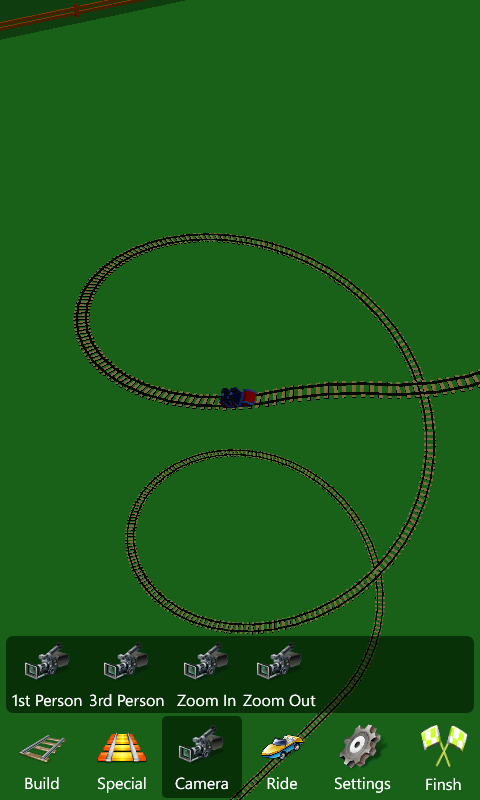
Roller Coaster on Windows Phone, 2012
Windows Phone, 2012
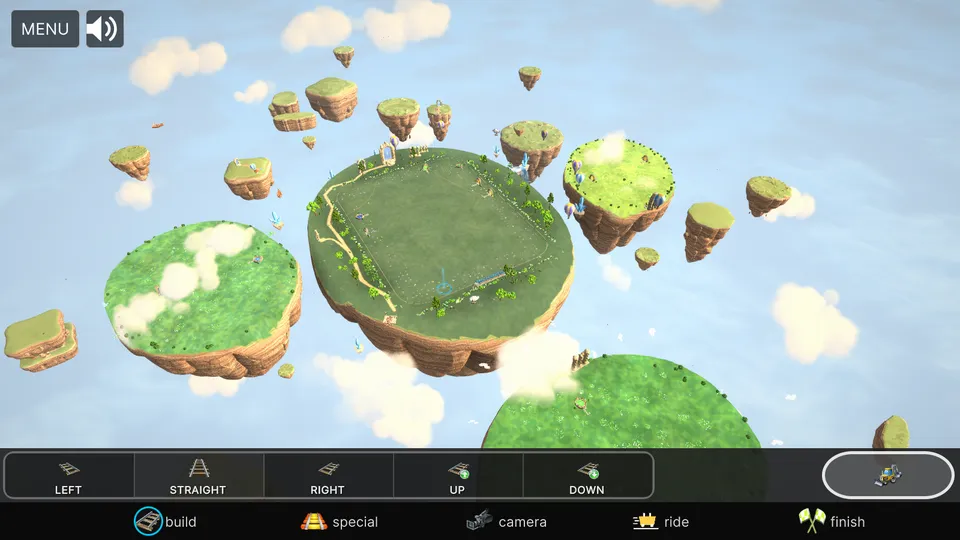
Roller Coaster Maker in 2026: the Sky Islands park from above
2026: Sky Islands
2026

AI tools · VETT and VETT Chat

A test rig for AI coding agents

The problem

Lighter open models need their harness tuned closely, and the popular open harness wasn't built for fast changes or agent teams.

What I built

VETT: define an agent in config, run it on benchmarks in a sandbox, and grade each task with its own tests. VETT Chat runs the same agent in VS Code.

What it found

A low score was often the harness, not the model. Fixing harness bugs mattered more than swapping models.

Open source  VETT on GitHub →  VETT Chat →

More detail

Why I built it. I set up the LLC with two DGX Sparks and a NAS to run open models and agent teams on my own hardware. Strong models do fine in most harnesses; lighter open models need the harness tuned closely. OpenHands, the most popular open harness for SWE-bench, is a strong single-agent harness, but I needed to change the harness quickly and often, and to run teams of agents, so VETT is built on top of it.

Benchmarks it runs. SWE-bench, SWE-rebench, a .NET set and my own benchmarks.

One setup, measured. 92% (23 of 25) on the 25 easiest tasks of SWE-bench Verified, with DeepSeek V4 Flash run locally, in under an hour. One run; an earlier open model scored 80–88%.

What's next. Repeated runs with the spread measured, so results can be compared fairly.

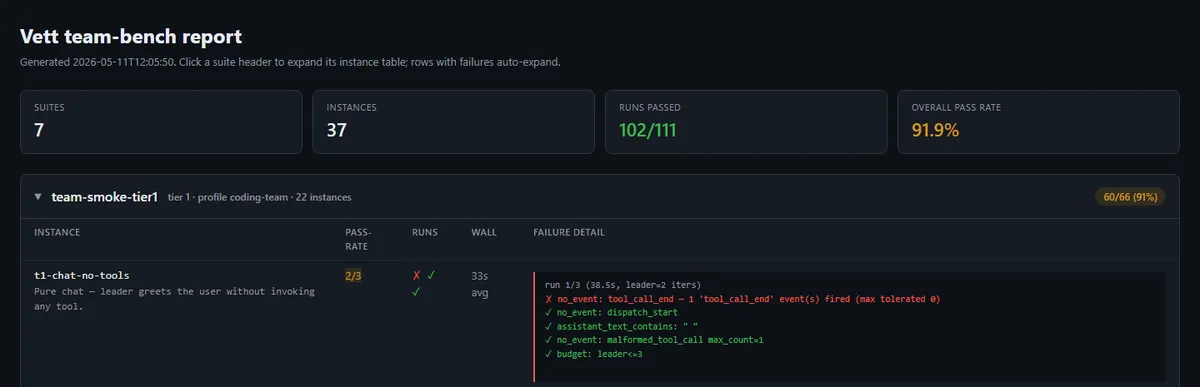
VETT run report with resolved, unresolved and empty results
Every run graded and split by failure type.
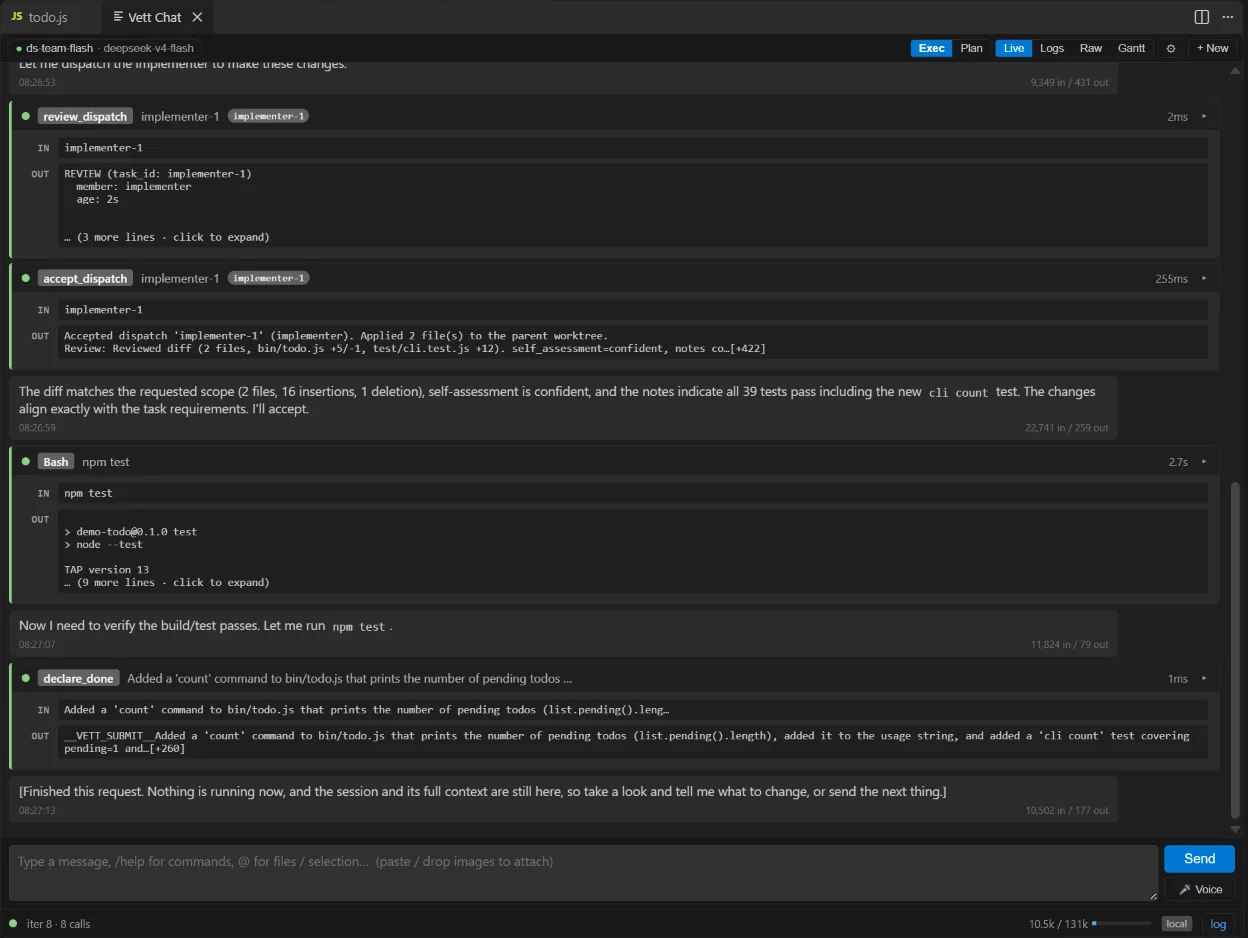
VETT Chat running an agent in a VS Code panel
VETT Chat: the same agent in VS Code.
2026

AI tools · AI Timeline

Seeing what a team of agents actually did

The problem

Once VETT ran teams of agents, reading logs one at a time hid the patterns.

What I built

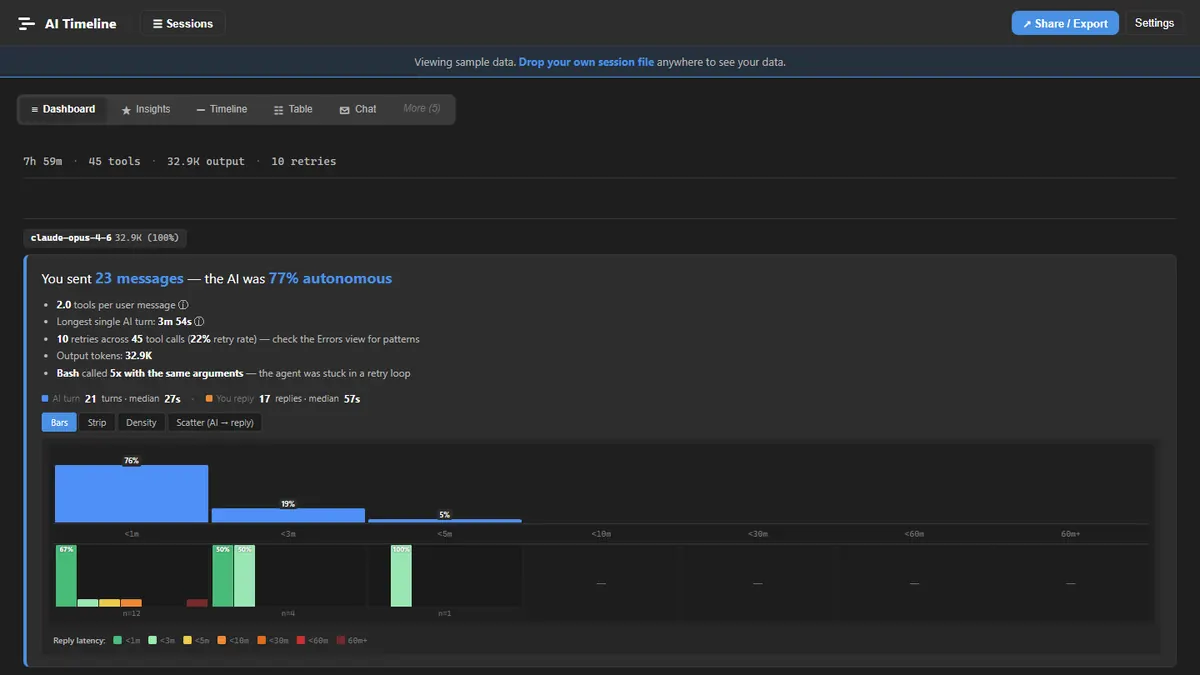
AI Timeline: load a folder of agent logs and see one row per agent, with tool use, messages between agents, and loops, retries and waits flagged. It runs in the browser.

What it showed

Many of VETT's harness fixes started as a pattern I spotted here first.

Open source  Try it →  GitHub →

More detail

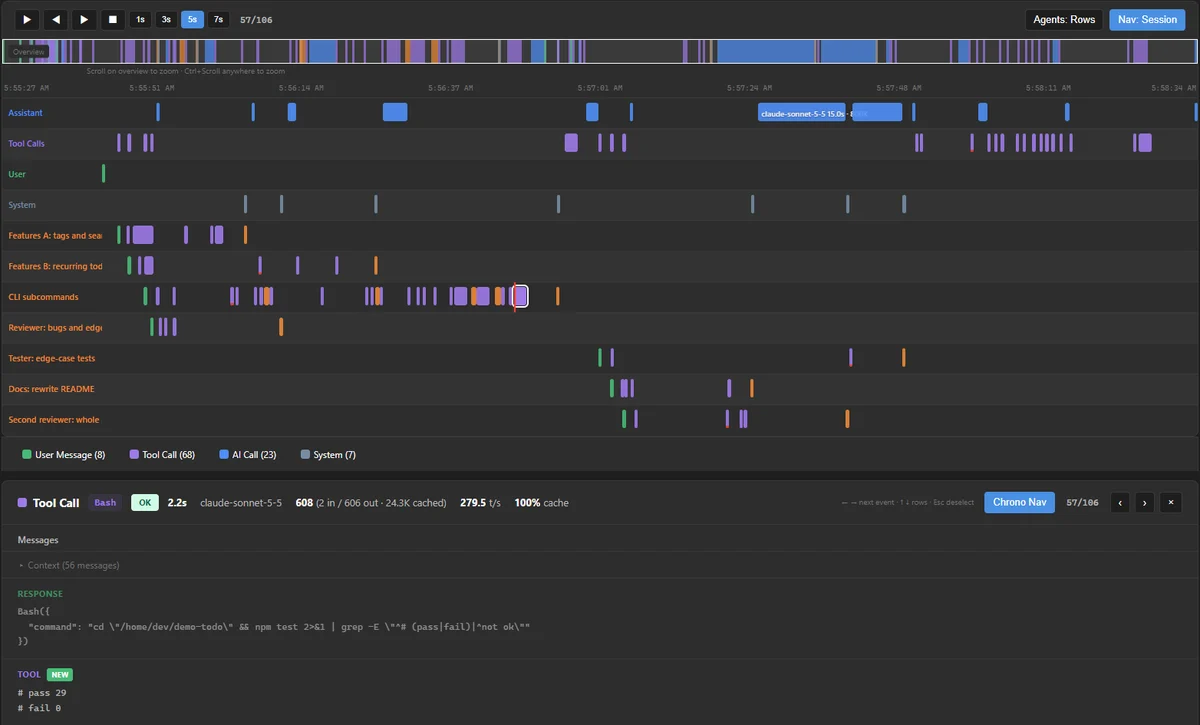
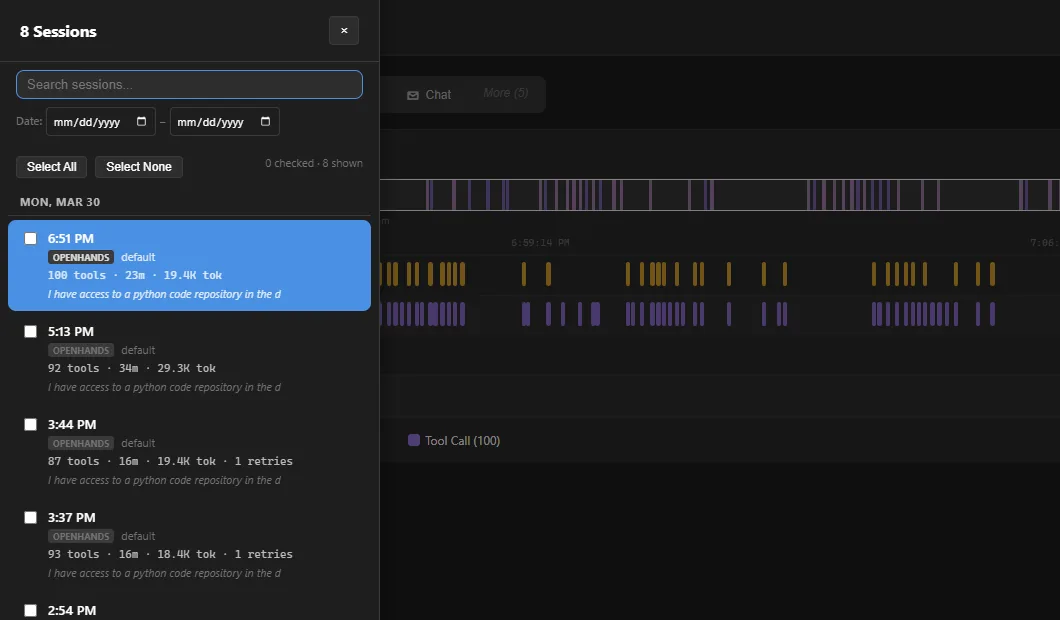
One row per agent in a team, with the messages between them, tool use, and loops, retries and waits flagged automatically. It runs entirely in the browser, so logs never leave your machine.

AI Timeline: a lead agent and its subagents, one row each
A lead agent and its team, one row each.
Findings dashboard with a detected retry loopSession list with time and tokens
2026

AI tools · EpicForge

Handing whole projects to a team of agents

What it is

A planner AI splits a project across teams of agents, keeps only work that passes its tests, and re-plans from every result. When it's stuck, it asks on a dashboard, so I answer when I have a minute instead of watching it live.

First real job

Eight fixes to my Minecraft bot in under four hours, with every check passing. Four of its six tasks ran out of time on the first try and were retried, but everything landed.

Stress test

Given a made-up spec for a mid-size C# web backend, it built three from scratch at once, with nobody watching. All three passed every one of their 56 checks.

Internal · experimental

Now

AI tools · Code-to-Spec · static analysis

Helping smaller models understand big codebases

The problem

On large .NET codebases, lighter models can't see enough of the system, and larger ones spend huge numbers of tokens reading it.

What I'm building

Code-to-Spec uses static analysis to read a .NET service and write a much shorter spec of what the code does. It's an experiment, not released yet: 56 of 60 in blind tests, against a release bar of 58.

Experiment · in progress

More detail

How accuracy is checked. Blind tests on projects Code-to-Spec has never seen: it answers behaviour questions about the code from the spec alone. It scores 56 of 60 today; it doesn't get released until it reaches the bar of 58, which was set before testing.

The rebuild test. Delete a service's code and have AI rebuild it from the spec alone. On five services, every rebuild passed the service's own tests and all, or all but one or two, of the hundreds of behaviour tests written against the original.

After that. Measuring whether the spec actually helps an agent fix real bugs, and publishing the result whether it does or not.

Oct 2026

Now playing

Roller Coaster Maker, rebuilt for the browser

What it is

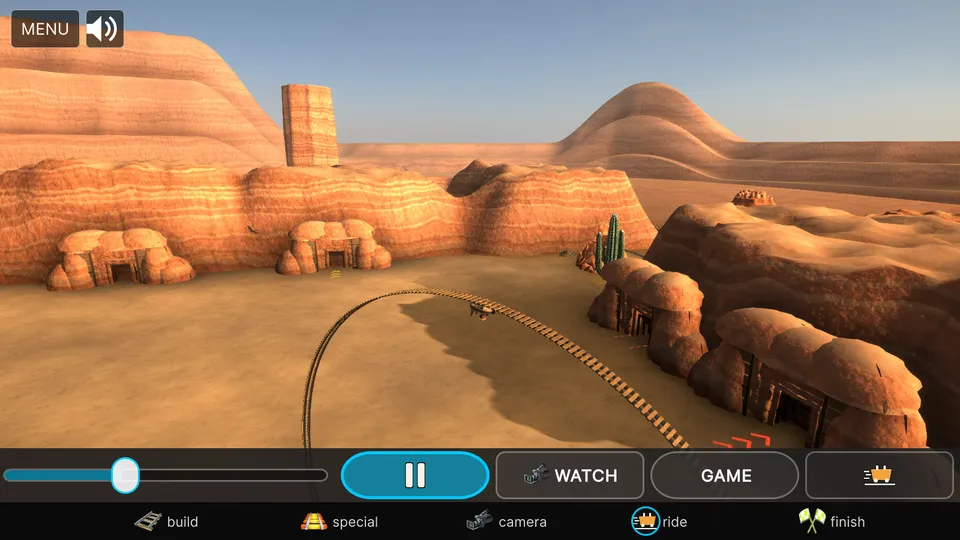
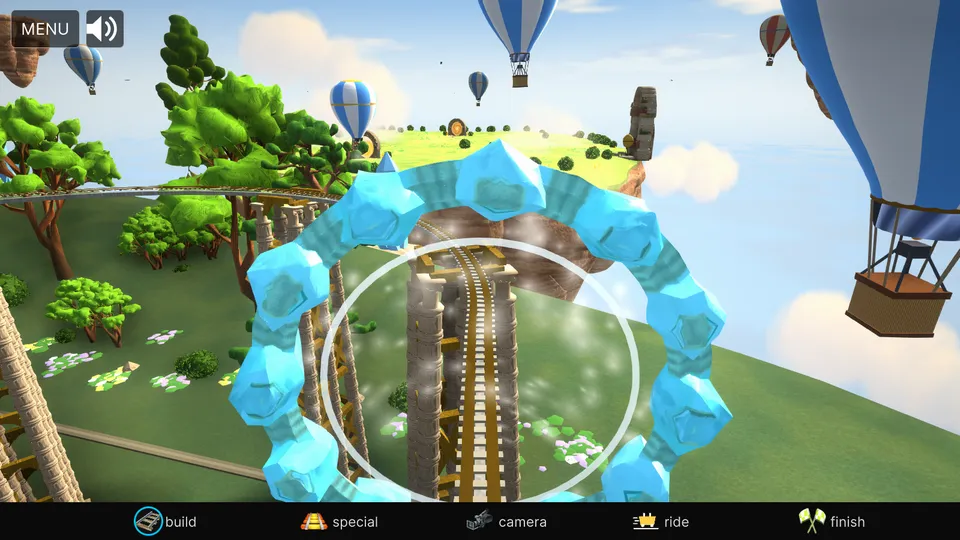
Build a coaster, ride it, and share it with a code, or ride live with others. Three parks: Wild West, Sky Islands and Launch Base. Free, and you can't break it: the track fixes itself.

Where it is

Playable now and still being polished. The full release is planned for the end of October 2026.

Playable · release end of October  ▶ Play free

More detail

Where it runs. Desktop or mobile browser, with no install or account. Web first; Android and iOS once it finds its players.

Free to play. Everything in it today stays free. New extra features may come later as optional paid add-ons.

Under the hood. Coaster building runs on the GPU: over 200,000 coasters built a second on one DGX Spark, with the same results as the CPU. How coasters finish was tuned across 10,000 simulated coasters, and millions of randomized play sessions, builds and save-and-reload checks caught four bugs that playtesting missed.

A Wild West coaster winding past red rock mesas and cactus
Wild West, Sky Islands and Launch Base.
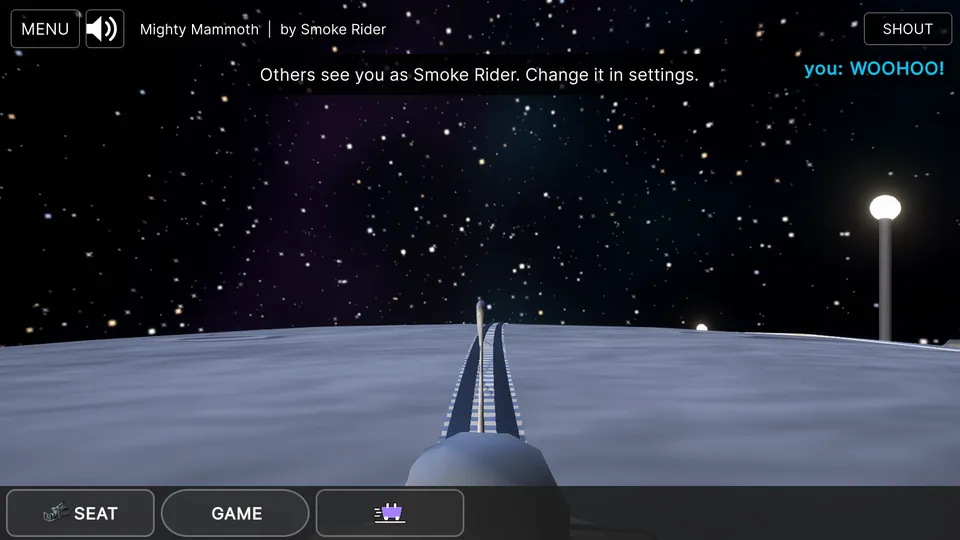
Sky Islands: track through a glowing crystal ringLaunch Base: a front-seat ride under a starry sky

Updates

  • BlogHow things were built, what worked and what didn't
  • Monthly updatesPosted on the 1st of each month

The company

Legal name
DickinsonBros LLC
Founded
January 2026
Location
Maricopa, Arizona, USA
Stage
Founder-run, self-funded, pre-revenue
Contact
[email protected]